
AWAAB'S LAW PHASE 2 READINESS
Resources for social housing landlords

We will be adding more resources guidance content for social housing landlords about Awaab's Law compliance here. Bookmark this page.
Awaab’s Law: member FAQs
What Is Awaab’s Law?
Awaab’s Law is the name commonly used for legal requirements officially known as Section 42 of the Social Housing (Regulation) Act 2023, it introduces mandatory timescales for landlords to investigate and remedy reported hazards like damp and mould.
Awaab’s Law was introduced following the death of two-year-old Awaab Ishak in December 2020. A coroner found that his severe respiratory condition was caused by long-term exposure to mould in the rented home where his family lived.
In the wake of this tragedy, Awaab’s parents tirelessly campaigned for justice, starting a petition to ensure that no other family would have to face the same devastating consequences. This law stands as a direct result of their efforts to prevent such tragedies and protect families from the dangers of mould in their homes.
How does Awaab’s Law change social housing landlords’ legal responsibilities?
Under Awaab’s Law, landlords will bear full responsibility for preventing and addressing damp and mould, and other hazards. Unlike previous legislation where tenants had to prove mould was caused by the property, the new rules place the burden on landlords to demonstrate they have taken steps to prevent the issue.
What are the mandatory timescales for responding to tenant complaints?
When a complaint regarding a potential hazard is received, you’ll need to adhere to a legally mandated timeline to ensure tenant safety:
- Emergency work must be completed within 24 hours to address immediate concerns.
- Landlords are required to investigate the issue within two weeks.
- If the issue poses a significant risk to health or safety, repairs must begin within a further seven days.
- These timescales ensure swift action to protect tenants and maintain safe living conditions.
When Is Awaab’s Law effective from and how will it evolve?
- Awaab’s Law is effective from 27 October 2025, with its first phase focusing on addressing dangerous damp, mould and other emergency hazards that require a 24-hour response.
- The law will gradually expand to cover a wider range of hazards, ensuring a safer living environment for all.
- 2026: The law will extend its mandatory time frames to include additional non-emergency hazards such as excess cold, heat, structural collapse, fire risks, electrical faults, and hygiene concerns.
- 2027: The requirements will further broaden to address all remaining hazards identified by the Housing Health & Safety Rating System (HHSRS), with the exception of overcrowding.
What are the consequences of failing to comply with the timescales under Awaab’s Law?
Not meeting the timescales set out by Awaab’s Law can lead to serious consequences, both legally and financially. Tenants are protected under the Retaliatory Eviction Ban, meaning they can raise issues with the local council or environmental health department without the risk of eviction.
The local council may carry out an inspection using the Housing Health and Safety Rating System (HHSRS). If they find any hazards, they could take immediate action to protect the tenants. Possible actions include:
- Issuing Improvement Notices that require you to resolve the issue within a set time frame.
- Fines of up to £30,000 per offence if you don’t comply.
- Banning Orders, preventing you from renting out your properties.
- Emergency remedial work, which would be charged to you.
It’s essential to address these issues promptly to avoid potential penalties and ensure safe living conditions for your tenants.
What ventilation solutions does envirovent provide for social housing?
envirovent manufactures and supplies a range of award-winning, energy-efficient ventilation systems specifically designed to meet the needs of social housing. Their solutions include the Filterless Infinity 8 extractor fan and ATMOS® PIV, which deliver effective, compliant moisture control through innovative, market-leading designs.
The Infinity 8’s filterless extractor fan ensures optimal performance with minimal maintenance, while ATMOS® PIV continuously delivers filtered air, helping prevent condensation and mould. Combined with intelligent remote data logging and monitoring from our partnership with Vericon Systems, these solutions enable you to proactively maintain safer, hygienic homes for tenants.
The local council may carry out an inspection using the Housing Health and Safety Rating System (HHSRS). If they find any hazards, they could take immediate action to protect the tenants. Possible actions include:
- Issuing Improvement Notices that require you to resolve the issue within a set time frame.
- Fines of up to £30,000 per offence if you don’t comply.
- Banning Orders, preventing you from renting out your properties.
- Emergency remedial work, which would be charged to you.
It’s essential to address these issues promptly to avoid potential penalties and ensure safe living conditions for your tenants.
What data logging solutions can envirovent provide to help with compliance?
Through their partnership with Vericon Systems, envirovent offers advanced remote environmental data logging solutions designed to help you stay ahead of compliance requirements.
envirovent’s system provides real-time monitoring of relative humidity and temperature levels, enabling you to identify properties at risk of damp and mould before they become formal complaints. With automated compliance reports and a detailed audit trail of environmental conditions and interventions, you get clear, evidence-based records to meet the demands of new legislation and proactively manage your properties.
Which envirovent Ventilation Products Include Data Logging Capabilities?
To help you meet the critical record-keeping requirements under Awaab’s Law, our award-winning Filterless Infinity extractor fan comes with a data logger as standard. When paired with our Vericon Systems partnership, this feature provides valuable insights into the performance of heating and ventilation systems. It helps track usage, ensuring you have the evidence you need for disrepair cases and compliance audits, all while demonstrating proactive management and keeping your properties fully compliant with ease.
What training can envirovent provide to help my teams ensure compliance?
envirovent offers a range of expert-led, accredited courses and training workshops designed to enhance the skills of your in-house repairs and maintenance teams, ensuring they stay compliant and follow best practices. Their training programmes include:
- CPD-accredited Condensation & Mould Workshops
- CPD-accredited Domestic Ventilation Best Practice Toolbox Talk
- CIBSE CPD Domestic Ventilation Workshops
- NICEIC Ventilation Courses
- Part F Toolbox Talks
With envirovents support, your team can gain the knowledge and confidence to tackle ventilation challenges effectively, maintaining high standards and compliance every step of the way.
Why should I trust Efficiency North and envirovent to help me ensure compliance with Awaab’s Law?
Efficiency North understands social housing and the challenges providers face in turning new requirements into effective day-to-day practice. As a not-for-profit consortium owned and governed by social housing providers, we have extensive experience bringing housing organisations and the construction industry together to deliver better value and outcomes for communities. Our approach to Awaab’s Law is therefore grounded in the realities of the sector, helping you assess your position, identify priorities and translate requirements into practical action for residents.
envirovent has a proven history of providing effective and reliable solutions to the social housing sector. They are committed to helping social housing providers navigate the new requirements of Awaab’s Law with confidence, backed by strong credentials:
- A trusted market leader in social housing ventilation for over 30+ years.
- Fastest growing UK manufacturer of low-energy ventilation products designed to improve indoor air quality.
- Their solutions are specified by over 650 social housing landlords across the UK.
- They are supported by a nationwide team of directly employed, accredited installation engineers, ensuring quality and compliance.
- They are part of Soler & Palau, the largest worldwide ventilation group, giving us unparalleled resources and expertise.
How do I take the first step to ensuring Awaab’s Law compliance with Efficiency North and envirovent?
Efficiency North and envirovent’s Insights on Awaab’s Law: From Phase 1 Lessons to Phase 2 Readiness for the Social Housing Sector
Download our Phase 2 Briefing Document for a concise overview of the key changes, challenges and practical steps social housing landlords can take to prepare for Awaab’s Law Phase 2.


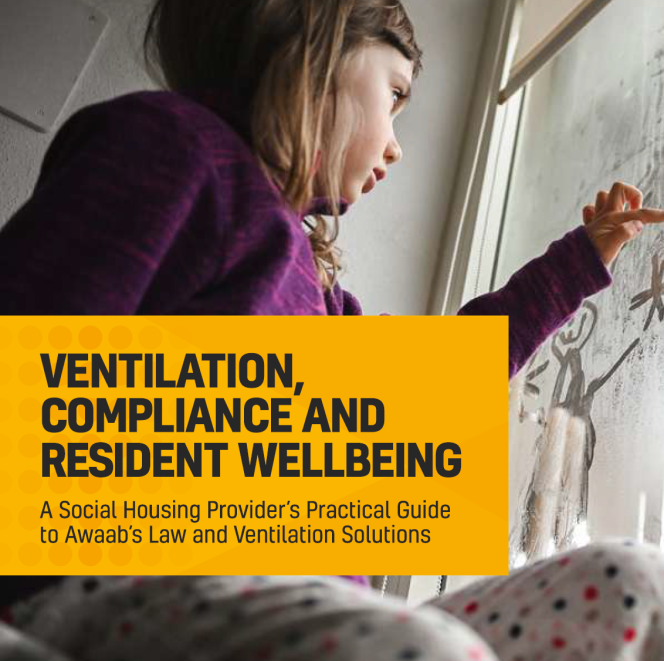
Ventilation, Compliance and Resident Wellbeing: free eBook by envirovent
A Social Housing Provider's Practical Guide to Awaab's Law and Ventilation Solutions
This eBook by envirovent provides practical guidance on meeting new regulatory requirements, proven approaches to tackling damp and mould, and strategies for building stronger compliance frameworks.

SOCIAL
- Health & Safety
- Equality, Diversity and Inclusion
- Timely payment of suppliers
- Increase biodiversity
- Conflict zones and supplies from conflict zones
- Modern Slavery policy
- Social Value
GOVERNANCE
- Board independence, diversity and structure
- Board and directors’ appraisal
- External and internal audits
- Risk management
- Executive pay
- Bribery, corruption and anti-money laundering
- Economic sanctions
- Tax


 EN:Procure
 EN:Communities
